Instagram Stories Ideas for Business: 25 Useful Prompts and a Weekly Plan
Plan Instagram Stories that answer customer questions, show the work, invite replies and make buying easier without posting all day.
S
SocFan Team
Author
0
September 29, 2026
Plan Instagram Stories that answer customer questions, show the work, invite replies and make buying easier without posting all day.
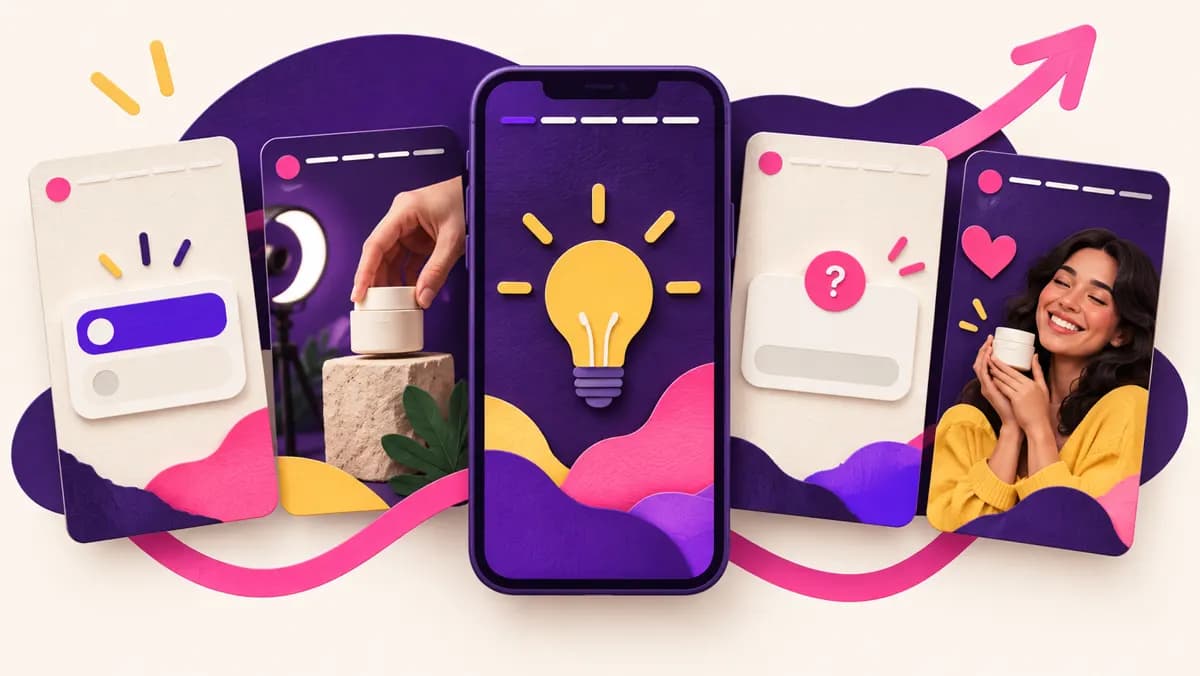
Instagram Stories can be a place for quick updates, conversations and timely answers that do not need a permanent grid post. A business does not need to share every moment of the day. It needs a reason for each sequence: explain something, show progress, ask a useful question or help a customer take the next step. That focus makes Stories easier to create and easier for viewers to follow.
Before posting, decide what the viewer should know or do after the last frame. One Story might show that a product is back in stock. A three-frame sequence might explain how to book a service. A poll can reveal what customers are unsure about. If a sequence has no purpose beyond “staying active,” it is fine to skip it and post something more useful later.
Compare Instagram engagement packages
Instagram says users should not artificially collect followers, likes or shares. Review its rules before purchasing a follower package. Instagram Community Guidelines.
1. Answer the question that appeared most often in direct messages this week. 2. Show where to find delivery information on your website. 3. Explain the difference between two services in one sentence and one example. 4. Show what a first appointment includes. 5. Clarify a common price misconception, including what the quoted amount covers.
Keep each answer short enough to understand without pausing repeatedly. If the subject needs more detail, link to a permanent post or FAQ page. Do not squeeze tiny text onto a crowded photo. Add captions to speech-led clips and check that the text is readable against the background. The aim is to reduce the number of unanswered questions, not to hide an answer behind a sticker.
Continue with these practical guides: Best time to post on Instagram and TikTok: how to find yours.
6. Show the first step in preparing an order. 7. Show one quality check before shipping. 8. Introduce a person responsible for a customer-facing task, with consent. 9. Show a tool or material and explain why you use it. 10. Share a small process improvement made after customer feedback. Each idea gives a reason to trust the work behind the product.
Behind-the-scenes does not mean exposing confidential details or filming staff who do not want to appear. Choose moments that teach something about care, reliability or craft. A florist might explain how stems are conditioned; a repair shop might show a non-customer demonstration of a diagnostic test. Add a sentence about why the process matters to the buyer. Otherwise the viewer sees motion but not value.
11. Show scale with a familiar object. 12. Demonstrate the product in an ordinary setting. 13. Compare two sizes or plans for different needs. 14. Show what arrives after checkout. 15. Explain one limitation honestly so the right customer can choose. These Stories help people imagine the purchase and can reduce returns or mismatched expectations.
Use current product pages for prices and availability. A Story that disappears after a day can still be screenshotted, so do not make a claim you cannot support. If the offer has a date or stock limit, state it plainly. Link directly to the correct item when the app permits it, and test the link yourself. A swipe or tap should not lead to an unrelated homepage.
16. Poll viewers between two real product colors you are considering. 17. Ask what part of a process they find confusing. 18. Invite a question about a specific topic, such as shipping or care. 19. Use a quiz to teach a small fact, then explain the answer. 20. Invite viewers to choose the next demonstration. Interaction works when the business listens and follows through.
Avoid asking broad questions that require a long essay. A poll is easier to answer than “Tell us everything you think about our brand.” After collecting responses, share what you learned and what you will do with it. If people submit a question that includes private information, answer it privately or anonymize it before making a public Story. Engagement should create a better conversation, not just a larger metric.
21. Share a genuine local event you are joining. 22. Introduce a partner whose work complements yours. 23. Show a customer result with permission. 24. Explain a temporary schedule change. 25. Thank the community for a specific contribution, such as feedback on a new product. These ideas make the business feel present without inventing a promotion every day.
Give credit when you share another creator's work and follow advertising disclosure rules for paid collaborations. A useful partner mention explains why the audience should care. “Visit the photographer who helped us show these products clearly” is more meaningful than tagging ten accounts for reach. Timely updates are most valuable when they tell people what has changed and what action, if any, is needed.
Frame one names the question or change. Frame two shows the evidence, example or process. Frame three gives one clear next step. For example: “Which size fits a small desk?” followed by side-by-side photos with dimensions, then a link to the size guide. This is enough structure to make a Story useful without turning it into a long presentation.
Use consistent colors and fonts so the business is recognizable, but prioritize readability. Leave room around text and interactive controls. Do not put essential details under the area where the app displays account names or reply fields. Watch the sequence once before posting. If you cannot read a frame comfortably at normal speed, simplify it.
Compare Instagram engagement packages
On Monday, answer a common question. On Tuesday, show a short process. On Wednesday, run a poll that informs a real decision. Thursday can share the result or an example. Friday can make a specific offer or booking reminder. Leave room for an event or customer update that genuinely happens. This is a flexible pattern, not a command to post five days every week.
Batch visuals when possible. Photograph several products while the space is ready. Save reusable blank layouts for FAQs and updates, but write the actual answer fresh. Assign who checks replies so questions do not sit unanswered. If the team has little time, two well-made sequences a week can be more useful than a stream of rushed frames.
Stories vanish from the main Story area, but useful answers can be saved to highlights. Keep a small set for pricing, delivery, booking, reviews with permission and frequently asked questions. Review them regularly. An outdated price or broken link in a highlight can confuse a customer long after the original Story was posted.
Start each highlight with a frame that explains what is inside. Name it with a familiar word rather than an inside joke. A customer looking for returns should not have to guess which icon means policy. Accessibility matters here too: use readable text and do not rely on color alone. Highlights should shorten the path to a decision.
Story view counts are only a starting point. Look at replies, poll responses, link taps, profile actions and questions that continue into direct messages. A sequence with fewer views but several qualified booking questions may be more valuable than a widely seen frame that no one acts on. Compare Stories with similar purposes and timing.
Keep a note of questions people still ask after viewing a Story. If they ask for a price already shown, the price may have been too small or buried too late. If many click a link but do not buy, inspect the landing page. Use the data to improve the next sequence, not to pressure viewers into interacting. A Story succeeds when it helps the customer.
SocFan's Instagram engagement packages are linked for readers comparing a paid option. A purchased like count is separate from the replies and customer conversations Stories can create. It does not guarantee Story reach, trust or sales. Instagram's rules discourage artificial collection of engagement, so review current guidance before buying. Never share a password or login code.
If the goal is better Stories, fix the answer, design and link path first. If the goal is a commercial package with a defined deliverable, compare quantity, final price and support on those terms. Keep genuine Story responses separate from purchased metrics so you can see what customers actually care about.
Choose one recurring customer question and make a three-frame answer. Record how many people viewed the sequence, replied, tapped the link or asked the same question again. Then repeat the topic with a clearer image or shorter answer the following week. This simple comparison tells you whether the Story helped people understand the issue. It also gives your team a practical reason to keep publishing. Do not change the offer and the Story format at the same time if you want to learn which improvement mattered.
There is no universal quota. Post enough to deliver a useful update or sequence, then stop. Quality and relevance matter more than filling every day.
They can be casual while remaining clear, accurate and on brand. Readable text and truthful details matter more than elaborate effects.
Information people may need later: how to order, prices, delivery, booking, current FAQs and permission-based examples.
A poll can reveal preferences or start a conversation, but it does not guarantee sales. Use the answers to improve the offer and follow up appropriately.
Compare Instagram engagement packages
Instagram Community Guidelines
View package and buy: InstaGrowth (5,000).
Continue with these practical guides: Instagram Captions for Business: A Clear Formula and Examples That Convert · How to Get Instagram Followers for a Small Business: A Practical 2026 Guide.
Explore our premium packages designed to help you achieve your social media goals
Write Instagram captions people understand and act on, with practical frameworks, examples for products and services, and mistakes to avoid.
A practical guide to getting relevant Instagram followers for a small business, with profile fixes, content ideas, local discovery and a clear look at paid packages.
A two-week method to choose schedules with your audience data, without depending on universal tables.